
Get Social 


Ali Gunsa (Ngari Gunsa Airport, Tibet) is a popular, shorter way to reach Kailash Manasarovar. Typically, pilgrims fly into Lhasa from Kathmandu or mainland China, take a domestic flight to Ali, then drive to Lake Manasarovar and Mount Kailash for a Kora (circumambulation) by foot or pony. There are tour operators who offer Kailash Manasarovar Yatra packages that depart from Lhasa to Ali Gunsa airport to avoid overland travel and save time or reduce travel duration. Ali Gunsa airport is about 300 km from Manasarovar Lake, and tours usually include acclimatization, holy dips, and Mount Kailash circumambulation. Kathmandu Lhasa Ali Kailash Tour operates every year from May to September.
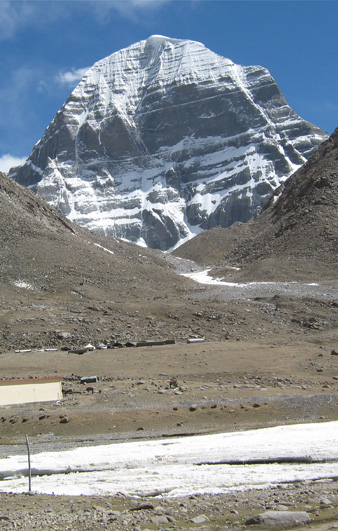
Mount Kailash rises to an elevation of 6714meters and is part of the highest Himalayan Mountain range. Four great rivers of Asia originate from here: Yarlung Tsangpo located at a height of 4500m., Manasarovar Lake is one of Tibet's highest Lake. Karnali, Indus, Sutlej and Brahmaputra. These two natural wonders are frequently linked because of their religious significance. The Tibetan Buddhists regard Mount Kangri Rimpoche as the meditating spot of Lord Shakyamuni. They perform Kora (circumambulation) of the mountain as their ultimate penance. The peak is considered the abode of Lord Shiva and his consort Parvati by Hindus. Hindus believe that making the journey to Kailash is to get rid of all known and unknown sins committed in their lives with Lord Shiva's blessing of salvation. The Jain believe that their first Saint Rishabhanath achieved liberation while meditating on a mountain. Kailash and Manasarovar Lake are visited by devotees and tourists around the world, especially from South and Southeast Asia. Each year, we offer special Kailash Manasarovar Tour packages. Please refer to the itinerary below and contact us directly to book.
Air China, Himalayan airlines Nepal and Sichuan Airlines fly direct flights from Kathmandu to Lhasa on a daily basis during summer days from Lhasa Gonggar International Airport of Tibet, the largest and busiest airport in Tibet. However, sometimes there will be a flight once a day and sometimes there will be a flight twice a day. Gonggar International Airport has direct flights to many Chinese cities including Beijing, Chengdu, Shanghai, Guangzhou, Xian, Kunming, Chongqing etc. Among all these cities, Chengdu is most popular for flights to / from Tibet. On a daily basis, more than ten flights depart from Chengdu for Lhasa. Flight from Kathmandu to Chengdu and connecting to Lhasa the next day. Monterosa Treks and Expedition Pvt. Ltd organize Kathmandu Lhasa Ali Kailash Tour.
12 May 2027 Day 01: Arrival in Kathmandu before 10:00AM
Afternoon after lunch, visit Kailashnath, Doleshwar Mahadev
Boudhanath, Kailash Yatra briefing and Arati Pashupatinath
13 May 2027 Day 02: Rudrabhishek, Hawan, Aarati, sights in
Jal Narayan in Budhanilkantha, visit Boudhanath & take lunch
Afternoon take briefing for Kailash Manasarovar tour in hotel
14 May 2027 Day 03: Fly to Gonggar airport & drive to Lhasa
15 May 2027 Day 04: Sights in Lhasa includes Potala Palace
16 May 2027 Day 05: Drive to airport fly Ali, drive to Darchen
17 May 2027 Day 06: Acclimatization / addition tour Astapad
18 May 2027 Day 07: Drive to Yam Dwar, start walk Dirapuk
19 May 2027 Day 08: Trek to Dolma La 5636m. & Zuthulpuk
20 May 2027 Day 09: Trek to Chongdo and drive to Darchen
Continue to drive Manasarovar for fully Hindu ritual by Nepali
Pandit, do Rudrabhishek, Full moon night in Manasarovar
21 May 2027 Day 10: Early morning drive to Ali airport, fly to
Gonggar airport Xizang Tibet, flight to Chengdu airport China
22 May 2027 Day 11 Drive to airport flight fly to Kathmandu
23 May 2027 Day 12 Transfer Kathmandu airport departure
12 May 2027 (Wednesday) Day 01: Monterosa Treks and Expedition Pvt. Ltd. staff will receive you at Tribhuvan International Airport and escort you to your hotel. It is important for every Yatri to reach Kathmandu 11:00 AM or before. In Kathmandu. After lunch, start sightseeing to Kailashnath. Kathmandu valley holy sightseeing as follows; Kailashnath Mahadev Statue is the tallest Shiva temple in Nepal. In Bali, Indonesia, it is second tallest Hindu deity after Garuda Wisnu Kencana Statue. Located about 20 kilometers away from Kathmandu, the Kailash Nath Shiva statue is located in Sanga, Nepal. Copper, zinc, cement, and steel were used in the construction of the statue, which stands 144 feet / 44 meters tall.
Visit Doleshwor (Doleshwar): To all Shiva devotees, a trip to Kailash is incomplete without visiting Doleshwar Mahadev and Pashupatinath temples. Doleshwar Mahadev was officially declared head of Kedarnath, one of the Char Dham Yatras, on Aug. 22, 2009. In 2013, after the devastating flood struck Kedarnath's temple, located in Uttarakhand, the regular prayers that were interrupted were conducted at Doleshwar Temple. Kedarnath Temple's head priest requested regular prayers to be held at Doleshwar Mahadev Temple instead of the Kedarnath Temple.
Visit Guhjeswari / Temple of Guhyeshori Shakti Pith. She is the mother of all the Astha Matrilas (Eight Mother Goddesses). In Hinduism and Buddhism, she is worshipped equally. According to the Hindu legend Pauranik Katha. In response to an insult from her husband Shiva, Shiva's first consort SATI DEVI fell into YAGYAAKUND (A religious fire ceremony). Shiva retrieved her, fire burned his corpse senseless by grief, and flew to and from Nepal and the Indian subcontinent. It is believed that SATI DEVI's body is scattered throughout 51 Shakti Piths. Her secret part (GOPYA) vagina, some say her anus fell to this place, which we call Guhyeshori. Additionally, she protects the deities of the Kathmandu valley. After visiting Guhjeswari, drive to Pashupatinath temple for Aarati holy dance on the banks of Bagmati river in front of Pashupatinath temple in the evening. We return to the hotel and have a vegetarian buffet dinner.
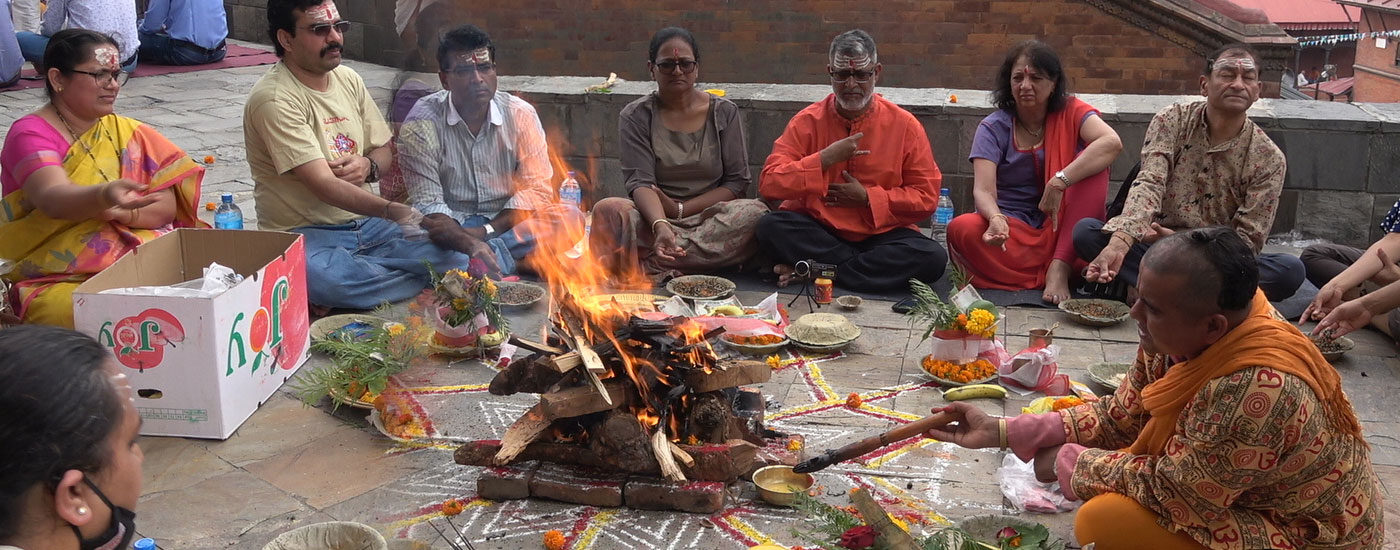
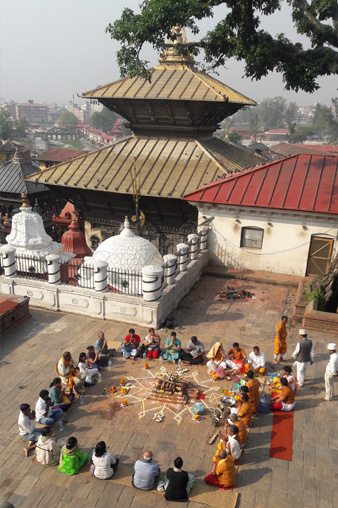
13 May 2027 (Thursday) Day 02: On the morning of Rudra Abhishek, Hawan, and Aarati, Kailash pilgrims are taken to Pasupatinath temple for Rudra Consecration. Brahmin priests prepare for fire offering Hawan in Pavilion (Mandap) and do Sankalpa Pooja in the beginning followed by Swastibachan (Preaching), Nyas, Rudra preaching, and Mahamritunjaya (Death victory) Pooja.
 Watch Kailash Tour Testimonials Video
The word 'Rudra', meaning 'Fearful Lord Shiva', derives from Rudrabhishek, Rudranti Iti Rudri, and Rudhiryoge Metal. People on this Earth suffer from pain, violence, greed, and we pray to God Shiva so that he grants them justice, good health, prosperity, peace and salvation. Rudri's mission is to ensure a peaceful world. The pilgrims' first stop during the Kailash tour is Pashupatinath and its worship. The practice of worshiping Lord Pashupatinath and performing Aarati is believed to grant devotees all kinds of good merits. Kailash Tours are considered complete only after a holy visit to Pashupatinath. One of the most important pilgrimage sites is Kailash Manasarovar.
Despite having too many Jyothirlinga and Shiva temples, Kailash is a pilgrimage destination. Humans are superior to souls in this Universe, sages are superior to humans, gods are superior to gods, and Lord Shiva is even superior to gods, Kailash is where the supreme Lord Shiva dwells. Hence, every pilgrimage is incomplete without the Kailash Pilgrimage. Doing Rudra (Shiva's idol) Consecration and fire offering (Hawan) to Lord Pashupatinath is a popular religious tradition to wish for a successful Kailash Tour. Bhatta pujari performs Panchamrit Pooja in Pashupatinath temple every day between 9:30 AM and 11 AM after Rudra Abhishek. The temple has an offering available, but it is a payable Pooja that includes a Pooja Thali, milk, Rudrachhe mala, flower garland, and a lamp. By offering Panchamrit Pooja to Lord Pasupatinath, the devotee fulfills all the desired wishes for the Kailash Manasarovar Yatra / tour. After receiving Prasad and Rudrachhe mala, the ceremony ends. Hindu devotees are the only ones who may perform this, Pooja. The main gates are not open to other religions.
Jal Narayan (Budhanilkantha): The Budhanilkantha (Jal Narayan) Vishnu Temple, located in Budhanilkantha, Nepal, is an open-air Hindu temple dedicated to Lord Vishnu, around 2:00 PM in the afternoon. At the northern end of the Kathmandu valley, Budhanilkantha Temple is located below Shivapuri Hill and is recognized by its large reclining statue of Lord Vishnu. In Budhanilkantha, a sleeping Vishnu floats on a bed of snakes in a large pool of water depicting the cosmic ocean, like a giant astronaut. The peculiar name refers to two legends attached to the statue, one of which states that a farmer found the long-lost statue while plowing his field, and another stating that Vishnu sacrificed himself by drinking the poison of the cosmic ocean, which turned his throat blue.
In Buddhist Temple in Boudhanath the 5th century, Boudhanath stupa was built with the wisdom eyes of Gautama Buddha for four cardinal directions, making it the second largest stupa in the world. The Buddha is an important pilgrimage site for Tibetans because of its immense stupa. Prayers and seminars are held nearby at monasteries and schools. Devotees stroll around the white dome and visit the monasteries and schools nearby. There is no doubt that the Buddha Stupa dominates the skyline. Over 50 gompas (Tibetan convents) have been built around Buddha as a result of the influx of Tibetan refugees. UNESCO has listed Boudhanath Stupa as a World Heritage Site since 1979. This is where KTM Valley is credited with its glory.
14 May 2027 (Friday) Day 03: Around 5:30 AM in the morning, drive to Kathmandu airport and in the morning, fly to Gonggar airport in Tibet. Arrival Lhasa Gonggar airport, the Tibetan tour guide welcomes all Kailash Yatri with Tibetan Khata (white garland). From the airport, everyone is driven to Lhasa city in a minibus or bus. We travel about 62.5 km away from Gonggar airport and it takes about an hour or bit more. We enjoy the amazing views of the naked hills, the settlements at the bottom of the hills and the agricultural land full of crops along the way. Check in at the hotel.
15 May 2027 (Saturday) Day 04: A full day of guided sightseeing in Lhasa, including the Potala Place and the local market Bharkhor. The city of Lhasa, capital of the Tibet Autonomous Region, is surrounded by the Himalayan mountains and steeped in history and culture. The city is a major center for Tibetan Buddhism and a hub for Tibetan culture and religion. Its abundant sunshine makes it known as the "City of Sunshine" Lhasa is a unique combination of ancient traditions and stunning natural beauty that makes it an ideal destination for travelers of all ages.
16 May 2027 (Sunday) Day 05: We fly from Gonggar Airport to Ali Gunsa Airport (4500m.). Then we drive for 3 hours to Darchen, covering a distance of 300KM. This high-altitude commercial airport is located in the Ngari Prefecture of Tibet, China, and is known as Ali Gunsa airport. Mount Kailash and Lake Manasarovar are accessible from this place, which is important for travelers. Located at a high altitude of 4,274 meters or 14,022 feet, the airport is known for its high altitude.
Located in the Ngari Tibet Autonomous Region, Ali Kunsha Airport serves the town of Shiquanhe as a military and civil airport. A small town in western Tibet, Darchen serves as a gateway for pilgrims and trekkers visiting Mount Kailash as well as the circle / Pradakshina. Aside from its geographic significance, Darche has a great deal of historical significance. A spiritual center where people of various faiths (Buddhism, Hinduism, Jainism, and Bon Po) converge, drawn to the revered Mount Kailash. Those who do the 53-kilometer (32-mile) Kora circuit around the mountain rely on the village for essential service.
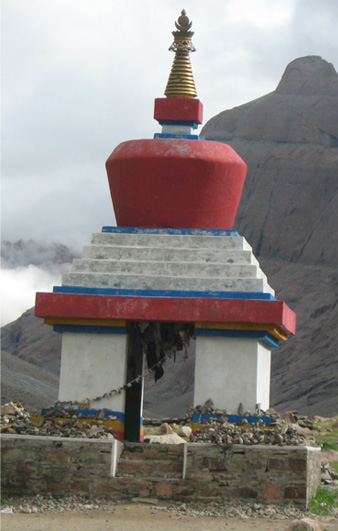
17 May 2027 (Monday) Day 06: Morning after breakfast and drive to Serlung Gompa, walk for 10 minutes to Astapad and Darshan Kailash South Face and Nandi Parvat very closed. There is a Buddhist monastery called Serlung Gompa and hill called Astapad is revered by both Jains and Buddhists as a sacred site. "The mountain hills of the eight steps" is also known as Astapad. The nearby sacred site of Astapad is located at the foot of South face of Mount Kailash, in a mountain amphitheater. According to Jain mythology, Astapad is the place where the first Jain Tirthankara attained nirvana. You can view Mount Kailash's south face as well as Nandi Parvat from Astapad, a mountain amphitheater at the base of Mount Kailash. Additionally, Nandi Parvat, which lies near Mount Kailash, is visible from Astapad. Astapad is located about 5 kilometers away from Darchen.
18 May 2027 (Tuesday) Day 07: From Darchen, drive to Yam Dwar (4860m.), and walk to Dirapuk (4860m.) where the Kailash Parikrama (circumambulation) begins. The distance between Yam Dwar and Dirapuk is 12 kilometers. There is a total distance of 53km in Kailash Parikrama, and we can choose between walking or riding a pony or horse for 38 kilometers after reaching Yam Dwar. To cover the remaining distance, a blue bus that is environmentally friendly will be used.
Watch Kailash Tour Testimonials Video
19 May 2027 (Wednesday) Day 08: The best place to view Kailash Parvat is in Dirapuk, which is just 5 km away from Kailash North Face. Everyone reaches here on foot or by pony riding, feeling like they have reached a haven. Charan and touch Kailash is now closed by Tibet Authority. Since we need to walk 22 kilometers from Dirapuk to Zuthulpuk today, this will be the longest walking. day. From Dirapuk, we climb to Shivasthal, Ganesh Kund, and finally Dolma La Pass (5636m.), the highest point of our journey. There are 7- 8 hours of walking between Dirapuk and Zuthulpuk. After Dolma La pass, walking down to Shapje Datok and following the Lham Chu River to Zuthulpuk, we'll arrive at Zuthulpuk, checking and overnight stay here.
20 May 2027 (Thursday) Day 09: Morning Walk to Chongdo and drive to Darchen, we collect all bags before Kailash kora, deposited drive to Manasarovar Kora (Pradakshina) starting from Darchen. Most likely, "Mansarovar circle" refers to Hinduism's, Buddhism's, Jainism's, and Bonpo's practices concerning the circumambulation of Lake Mansarovar. As part of the Kailash Manasarovar tour, reach Chiu Monastery at the bottom of the lake, which is where Hindu rituals begin for the Manasarovar Lake. During the Kailash Manasarovar Yatra, Nepali Pandits perform Rudrabhishek, Hawan, and Aarti pooja at Manasarovar Lake. In order to purify oneself and gain Lord Shiva's blessings, one prays, chants Shiva mantras, and performs rituals like Tarpan (offering holy water). It is considered highly auspicious and spiritually potent to visit Lake Manasarovar during a full moon night. In addition to enhancing the lake's spiritual energy, the reflection of the full moon on its surface is believed to offer pilgrims and visitors a powerful and sacred experience.
Full moon night in Manasarovar Lake.
Watch Kailash Tour Testimonials Video
21 May 2027 (Friday) Day 10: An early morning drive of approximately 250 km is necessary to reach Ngari Gunsa Airport (Ali Airport). You would typically drive northwest across the Tibetan plateau for about four hours. Having said that, it is crucial to understand that this is a high-altitude, rugged route that requires planning and should not be taken lightly. We fly from Ali Airport to Gonggar airport Xizang Tibet, continue flight to Chengdu airport & stay airport hotel.
22 May 2027 (Saturday) Day 11: Drive to Chengdu airport and fly to Kathmandu. Arrive at Kathmandu Tribhuvan international airport, transfer to hotel, check in and afternoon free.
23 May 2027 (Sunday) Day 12: Kailash Manasarovar tour comes to an end on this last day. We will bid our dear guest's farewell. After that, you will be transferred to the Tribhuvan International Airport in Kathmandu for your return flight back home or to another destination.
 Per Person USD 5500 (Double / Twin room Sharing)
Per Person USD 6000 (Single room)
Extra cost if required for Kailash Circuit:
Horse ride during the Parikrama 1 horse for 3 days USD 400
(Directly payable to the Tibetan guide)
Porter for carrying small bag for 3 days round Kailash USD 200
 We provide our meal in Manasarovar, Darchen and Kora
  Oxygen is less at higher altitudes. The inclement weather and high altitude induces certain illness generally not encountered over the plains. Headache, nausea, lassitude, lethargy, breathlessness, general uneasiness [malaise], high irritability, light loss of balance, disorientation, incoherence and insomnia are a few. It is common to all irrespective of the age, sex and physical fitness. Gradual acclimatization is the best answer. Tranquilizers, sleeping dose and strong anti-biotic must be avoided. Some of symptoms indicate that the body mechanism is readjusting to new environments. The best idea is deliberately slow down all the activities and follows the guidelines below:
Om Namo Shivaya ! Jaya Bhole Nath !! Har Har Mahadev!!!
What our client's says about Kailash yatra and tour operator





monterosa-nepal.com nepalexpedition.com
© kailashtourpackage.com - 2026
Online Payment 
Terms & Conditions
Site Design By: Webdesigninnepal.com