
Get Social 


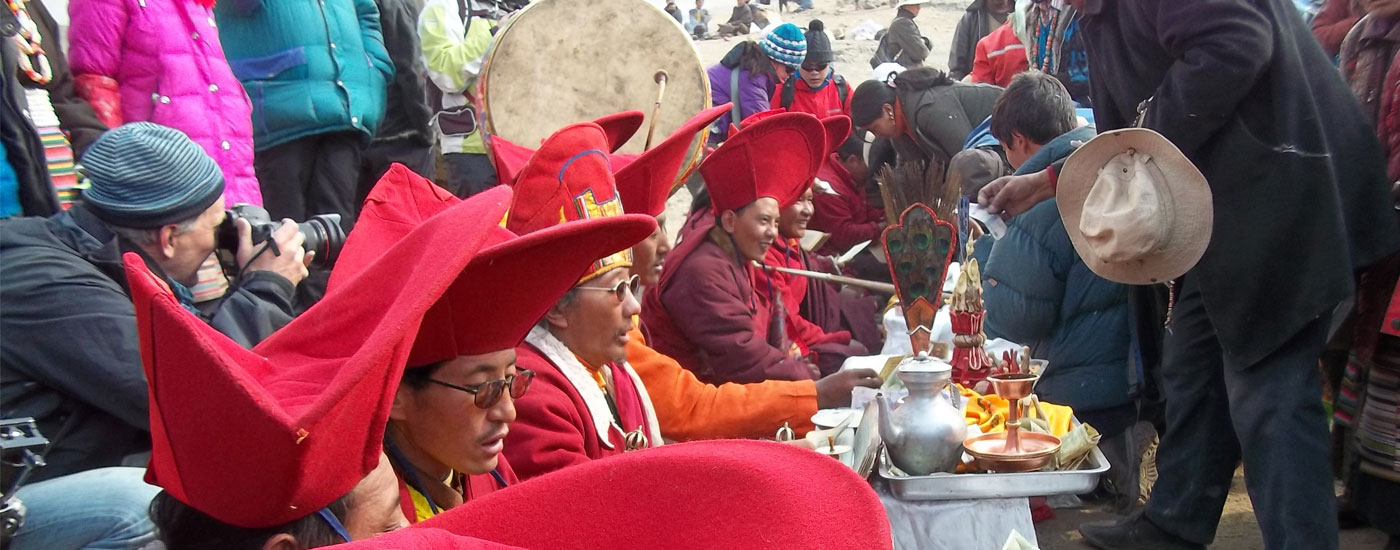
The Tibetan lunar calendar's fourth month, Saga Dawa, is considered to be the most holy month in Buddhism in Xizang Tibet. Three pivotal events in Buddha's life are commemorated. The full moon day is believed to have been the day of his birth, enlightenment, and Parinirvana. Saga Dawa festival is the most sacred of all, where positive karma is said to be multiplied 100,000 times. As part of the Saga Dawa festival tour package in Tarboche, pilgrims travel to Mount Kailash's base via routes such as Ali (Ngari Gunsa), culminating with the main event on the full moon of the fourth Tibetan lunar month: the ceremonial raising of the massive, prayer-flag-laden Tarboche flagpole, symbolizing spiritual renewal, followed by a sacred Kailash Kora (circumambulation). There are often hundreds of thousands of devotees and monks at Darchen/Tarboche for the ritual of adding flags, chanting, and starting the holy trek from Lhasa-Ali to Darchen.
Tibet's Saga Dawa festival tour package is one of the most important festivals of Tibetan Buddhism both within and outside the country. The Tibetan Lunar calendar indicates that the festival will be celebrated enthusiastically on 18 June 2027, the full moon day. On the auspicious day of Lord Buddha's enlightenment or nirvana, the Saga Dawa festival is held. The day is dedicated to changing the 'Tarboche' (prayer flags) near Mount Kangri Rinpoche (Mount Kailash) under the guidance of a Lama Buddhist priest. Flagpoles have a blessing on all living things on earth when they are upright. The single flagpole is erected annually with much fanfare and adorned with thousands of prayer flags donated by Tibetans. The Saga Dawa Festival Tour package in Tibet brings all Tibetan ethnic groups together in honor of Buddha and his teachings.
The Ali (Ngari Gunsa) Airport serves Shiquanhe (Ali) in eastern Tibet, and there are direct flights from Kathmandu to Lhasa and back. The Ali Airport, located at 4274 meters above sea level, will be the fourth-highest non-commercial airport in the world beginning on 1 July 2010. Tibet Airlines flies from Lhasa to Ali Airport in two hours. We then drive 300 kilometers to reach Darchen base camp of Kailash and it takes more than three hours. We can take a flight from Lhasa to Ali Airport since the road journey is quite difficult. During the Saga Dawa festival, Monterosa Treks & Expedition invites you to learn about Tibetan civilization and values by joining us on our trip to Tibet.
Significance of Ngari Gunsa Airport
Ngari Gunsa Airport construction, Mount Kailash and Manasarovar Lake are accessible by air who have limited time. There are a number of natural sites and cultural sites in Ngari, but Mount Kailash and Lake Manasarovar are the most influential. The sacred Mount Kailash is believed to be home to Demchok, the incarnation of Siva, while Lake Manasarovar is the mother of all sacred lakes. The Mount Kailash and Lake Manasarovar also have stunning scenery in addition to being Buddhist sites.
In the years that followed Ngari Airport's completion, the economy and tourism of the town developed rapidly. The Ngari region lies about 1,600 km west of Lhasa and lies at an elevation of 4,500 meters. It is a remote area, located about 4,500 meters above sea level in northwest Xizang Tibet. Due to the special environment and inconvenient transportation, local people had a hard time developing their lives. In spite of this, many resources have been brought into Ngari as the Ngari Gunsa Airport has been operational for some time now. The Ngari Gunsa Airport, also known as Ali Kunsha Airport, is located near Gunsa Village, Shiquanhe Town, in Ngari Prefecture, in western Tibet Autonomous Region. A civil airport was opened in Tibet on 1 July 2010, after Lhasa, Nyingchi, and Qamdo airports, with codes NGQ and ZUAL for IATA and ICAO, respectively.
Necessary Permit for Flights to Ngari
A Tibet Travel Permit, a Military Permit, and a Board Pass must be obtained in order to take a flight to Ngari. You will be required to present your original permits before boarding an airplane from Urumqi or Kashgar. You will be required to present your original Military ID and Board Pass prior to boarding a flight from Lhasa.
Tibet Travel Permit and Flight Travel
The Tibet Travel Permit (Tibet Entry Permit) is a MUST-HAVE document when flying to Tibet. It is firstly needed to book flight at the airport. The original Tibet Travel Permit will also be checked when you check into and out of the airports. You must duplicate at least three copies of your Tibet Travel Permit because the permit is required for a variety of purposes. Permits can only be issued in Tibet by the Tibet Tourism Bureau, and travelers can only apply through travel agencies. The permit takes about 15 days to obtain.
Route & Journey Highlights
Fly to Ali (Ngari Gunsa): Often the starting point in Tibet, allowing access to the Kailash region.
Drive to Manasarovar: A significant spiritual stop before reaching the trek's base.
Reach Tarboche / Darchen: The base camp for the Kailash Kora, where the festival occurs.
The Saga Dawa Festival at Tarboche 2027: Flagpole Ceremoney: There is a central event where the old Tarboche flagpole is removed and a new, towering pole is erected by pilgrims and monks. Spiritual Significance: All living creatures are believed to be blessed by the upright pole, and the correct erection brings good fortune. Kailash Kora: It marks the beginning of the challenging pilgrimage (Kora) around Mount Kailash, where devotees Buddhists and Hindus walk clockwise Bonpo walk anty clock wise Key Activities During Saga Dawa
Prayers & Chanting: Meditation and chanting are common practices among monks and pilgrims. Butter Lamp Offerings: The lighting of lamps symbolizes the dispelling of ignorance.
Generosity: Giving alms to the poor, performing good deeds, and giving to charity are highly valued.
Saga Dawa festival Date: June 18, 2027 (the 15th day of the fourth Tibetan lunar month, coinciding with the full moon).
Significance: It is the most sacred festival in Tibetan Buddhism, marking the birth, enlightenment, and death (Parinirvana) of Lord Buddha.
09 June 2027 Day 01: Upon your arrival at Tribhuvan International Airport, the staff of Monterosa Treks and Expedition Pvt. Ltd will receive you and escort you to the hotel. Everybody reaches Kathmandu 09:00 AM or before. After lunch will be holy sightseeing in Doleshwor Mahadev and Saga, biggest Shiva statue. Back to hotel and 4:PM will be briefing Kailash Manasarovar Yatra. In the evening, guests will be taken to Pashupatinath temple to have Aarati Darshan with Musical Ganga Arati corner by Holy Bagmati River.
10 June 2027 Day 02: Pilgrims will be guided towards Pashupatinath Temple for Rudra Abhishek, Hawan and Panchamrit pooja with special worship of the temple. After that, we will move to a hotel for a buffet Lunch. Afternoon, holy sightseeing in Boudhanath Buddhist temple and Hindu temple Jal Narayan in Budhanilkantha. In the evening, there will be a briefing about the Kailash Manasarovar tour. If no interest visit Pashupatinath temple, we do provide city guided sightseeing.
11 June 2027 Day 03: Having had breakfast in our hotel in Kathmandu, we travel to Tribhuvan International Airport around 8:30 AM It is possible that the flight time can be changed as summer approaches, but now it is fixed at 11:45 AM The flight to Chengdu takes 3 hours 05 minutes. During the flight, you can enjoy breathtaking views of the Himalayan range, including Mount Everest 8848m., Cho Oyu 8201m., Makalu 8463m., and Kanchenjunga 8586m. We will arrive local time around 5:00 PM and pass Chinese customs and immigration formalities, get out and drive to a 4-star airport hotel. A vegetarian meal will be provided in a Chinese restaurant.
12 June 2027 Day 04: Around 5:30 AM in the morning, drive to Chendu airport and 6:00AM in the morning, fly to Gonggar airport in Tibet and it takes 2 hours 35 minutes flight. The Tibetan tour guide welcomes all Kailash Yatri with Tibetan Khata (white garland). From the airport, everyone is driven to Lhasa city in a minibus or bus. We travel about 62.5 km away from Gonggar airport and it takes about an hour or bit more. We enjoy the amazing views of the naked hills, the settlements at the bottom of the hills and the agricultural land full of crops along the way. Check in at the hotel. Free day
13 June 2027 Day 05: Lhasa is the capital as well as the biggest city of Tibet. This city with wide road ways, sky kissing buildings is not less attractive than any developed western countries. Besides this, the palace of Dalai Lama: The Potala Palace, Zokhang Monastery at Bharkor Bazaar, Bharkor Bazaar itself and Bharkhor Monastery are other worthy and attractive places to visit at Lhasa. Lhasa City is at an altitude of 3,600 meters above sea level. The Potala Palace lies at the central part of Lhasa city and it is situated at a place at 150 meters height at the bottom of Lhasa city. This palace is also the adjoining place of meditative office building and administrative office building. The Red Palace symbolizes meditation whereas the white Palace signifies transparent administration. In Tibetan language, ‘Lhasa’ means ‘The Land of Gods and Goddesses’.
We can see different varieties of magical Buddha idols of Buddhist religion in The Red Palace, whereas; there are Meditation Room, Living Room, and Meeting Room for foreign guests of the Dalai Lama in The White Palace. Lhasa city is a valley which is also the adjoining place of two sacred rivers namely, Lhasa and Brahmaputra. According to Buddhists, it is believed that one can obtain ‘Nirvana’ meaning ultimate salvation, by having a divine view (Darshan) of Potala Palace and Zokhang Monastery at least once in the lifetime.
14 June 2027 Day 06: Today, we fly to Ali Airport (4500m.) from Gonggar Airport. We land at Ali airport and drive towards Darchen and it takes 4 hours covering a 250 km distance. Overnight stay in in Darchen. The drive primarily follows National Highway G219 and regional roads across the high-altitude Tibetan plateau. Most of the main highway is paved and well-maintained, though certain local sections or approaches near Darchen and the Mount Kailash region can have gravel or uneven surfaces. Ngari Gunsa Airport sits at roughly 4,274 meters (14,022 feet) and Darchen is around 4,570 meters, so travelers often feel the effects of high altitude during the journey.
15 June 2027 Day 07: Acclimatization / Rest or Addition tour to Astapada, after breakfast and drive to Serlung Gompa walk for about 10 minutes to ASTAPADA Hill and holy explore, have a Darshan of lord Kailashnath South Face Of Kailash and Nandi Parvat. There is a Tibetan Buddhist monastery called Serlung Gompa, which is located on the hill and this hill is called ASTAPAD it is revered by both Jains and Buddhists as a sacred site.
"The mountain hill of the eight steps" is also known as Astapad. The nearby sacred site of Ashtapad is located at the foot of South face of Mount Kailash, in a mountain amphitheater. According to Jain mythology, Astapada is the place where the first Jain Tirthankara attained nirvana. You can see the Mount Kailash's south face as well as Nandi Parvat from Astapada, a mountain amphitheater at the base of Mount Kailash. Additionally, Nandi Parvat, which lies near Kailash, is visible from Astapada. Ashtapad is located about 5km away from Darchen.
16 June 2027 Day 08:Drive Darchen to Yam Dwar & walking to Dirapuk: This is the first day of Kailash Parikrama/Kora. Morning drive to Yam Dwar and start walking to Dirapuk (4890meters 12 kilometers). We do start for Kailash circumambulation [kora] Circuit/Round/Parikrama from Yam Dwar. It takes 20 minutes for the Blue bus to reach there as it is at a distance of only 5km. This place is also known as Yam Dwar. Getting off from the bus at Yam Dwar, all the pilgrims are offering to Lord Shiva. Then, we moved around the Yam Dwar three times.
According to Hindu religion, this place is known as the Gate of the God of Death (Yam Dwar). Yam Dwar built the shape of a temple. Inside there are 3 bells hanging and they are called Barma, Vishnu and Maheshowar. This temple makes a 3 time circuit inside the door. Belling and get out and continue walking or riding a pony to Dirapuk on the first day of Parikrama. (Journey on foot begins from Yam Dwar) Physically disabled pilgrims distantly pay homage to Kailash Parbat and return to Darchen because the visit of Yam Dwar is believed to get equally religious gain as they do for Kailash Parbat itself. This path/trail is somehow busy with pilgrims, horses, local porters, yaks and Nepali workers.
After 3 hours of walking along the riverside path we stopped for our lunch. Kailash Parbat can be seen clearly from here. Below the Parbat we can see a big stone in the shape of an elephant. It is believed that god Indra rides on it. After a 2 hours long walk we can reach Dirapuk. There is a Dirapuk Monastery situated on the edge of Lha Chhu River. The name of this place is given from the name of Monastery itself. This Monastery is located at a height of 4900m. Above sea level. The scene of Kailash from here is like heaven. Hundreds of pilgrims arrive at Dirapuk from Yam Dwar riding on horse or on foot every day.
Here some Yatri prefer to take pony & local porter for the 3 days. (If you would like to take a pony and porter, you should tell the Tibetan guide in advance. Today, today have to walk continuously for about 5 to 6 hours. Yak will carry all our goods and equipment and your bags. From Dirapuk, you can see the north face of Mt. Kailash is a much closed, overnight stay at Dirapuk mud house/ guesthouse.
17 June 2027 Day 09: Today will be the longest walking day as we need to reach Zuthulpuk from Dirapuk. Climbing from Dirapuk we reach the Shivasthal, Ganesh Kund and finally the top of Dolma La Pass (5636m), which is the highest point of our journey. The walking time from Dirapuk to Zuthulpuk is 8 to 10 hours. We will then walk down and reach Shapje Datok then further to Zuthulpuk following Lham Chu River.
18 June 2027 Day 10: Early Morning walking to Chongdo from Zuthulpuk, The Saga Dawa Festival is being held in Tarboche nearby Yam Dwar in the late morning. On the night of the full moon, drive to Manasarovar Lake after the Saga Dawa festival. Watch the full moon reflecting light on Manasarovar Lake and stay overnight. Kailash Manasarovar Yatra take place ideally between May to September, especially around auspicious dates like Guru Purnima and Janai purnima or Rekha Bhandan and Srawan Massa, to enhance spiritual energy. The trip often involves staying at Chiu Gompa for spectacular views and performing holy rituals. During a parikrama (circumambulation) around the lake, pilgrims meditate and bathe, believing it purifies the soul. The reflected light of Mount Kailash makes the experience seem miraculous and divinely blessed. Full moon night in Manasarovar Lake
19 June 2027 Day 11: Early morning drive to Ali Gunsa airport. the flight from Ali Airport to Gonggar Airport in Lhasa. Arrival Gonggar airport, drive to Lhasa city and spent 1 night at Lhasa town.
20 June 2027 Day 12: Fly to Kathmandu after having our breakfast at a hotel. We spent our night in the hotel at Kathmandu.
21 June 2027 Day 13: This is the last day of our tour and there will be farewell to our dear guests. Then, you will be transferred to Tribhuvan International airport Kathmandu for returning back to their home country.
Per Person USD 6,000 (Double / Twin room Sharing)
Per Person USD 6,500 (Single room using)
Extra cost if required for Kailash Circuit:
Horse ride during the Parikrama 1 horse for 3 days USD 400
Porter for carrying small bag for 3 days round Kailash USD 190
(Directly payable to the Tibetan guide)
Note: 3 nights in 3 places like Manasarovar Lake, first day of Kora - Dirapuk and second day of Kora - Zuthulpuk will have a dormitory bedroom and very basic toilets available.
Oxygen is less at higher altitudes. The inclement weather and high altitude induces certain illness generally not encountered over the plains. Headache, nausea, lassitude, lethargy, breathlessness, general uneasiness [malaise], high irritability, light loss of balance, disorientation, incoherence and insomnia are a few. It is common to all irrespective of the age, sex and physical fitness. Gradual acclimatization is the best answer. Tranquilizers, sleeping dose and strong anti-biotic must be avoided. Some of symptoms indicate that the body mechanism is readjusting to new environments. The best idea is deliberately slow down all the activities and follows the following rules:
Om Namo Shivaya ! Jaya Bhole Nath !! Har Har Mahadev!!!
What our client's says about Kailash yatra and tour operator





monterosa-nepal.com nepalexpedition.com
© kailashtourpackage.com - 2026
Online Payment 
Terms & Conditions
Site Design By: Webdesigninnepal.com